Lightweight Metal 3D Printing Alloys in 2026: B2B Weight Reduction Guide
In the fast-evolving landscape of additive manufacturing, lightweight metal 3D printing alloys are revolutionizing B2B operations across the USA. As industries like aerospace, automotive, and electric vehicles (EVs) prioritize fuel efficiency, performance, and sustainability, these advanced materials offer unparalleled opportunities for weight reduction without compromising strength. This comprehensive guide, tailored for USA-based manufacturers and engineers, delves into the latest innovations projected for 2026, drawing on real-world expertise from Metal3DP Technology Co., LTD. Our insights are grounded in hands-on testing and verified comparisons, helping you integrate these alloys into your supply chain for competitive advantage. For more on our pioneering solutions, visit https://met3dp.com/about-us/.
Metal3DP Technology Co., LTD, headquartered in Qingdao, China, stands as a global pioneer in additive manufacturing, delivering cutting-edge 3D printing equipment and premium metal powders tailored for high-performance applications across aerospace, automotive, medical, energy, and industrial sectors. With over two decades of collective expertise, we harness state-of-the-art gas atomization and Plasma Rotating Electrode Process (PREP) technologies to produce spherical metal powders with exceptional sphericity, flowability, and mechanical properties, including titanium alloys (TiNi, TiTa, TiAl, TiNbZr), stainless steels, nickel-based superalloys, aluminum alloys, cobalt-chrome alloys (CoCrMo), tool steels, and bespoke specialty alloys, all optimized for advanced laser and electron beam powder bed fusion systems. Our flagship Selective Electron Beam Melting (SEBM) printers set industry benchmarks for print volume, precision, and reliability, enabling the creation of complex, mission-critical components with unmatched quality. Metal3DP holds prestigious certifications, including ISO 9001 for quality management, ISO 13485 for medical device compliance, AS9100 for aerospace standards, and REACH/RoHS for environmental responsibility, underscoring our commitment to excellence and sustainability. Our rigorous quality control, innovative R&D, and sustainable practices—such as optimized processes to reduce waste and energy use—ensure we remain at the forefront of the industry. We offer comprehensive solutions, including customized powder development, technical consulting, and application support, backed by a global distribution network and localized expertise to ensure seamless integration into customer workflows. By fostering partnerships and driving digital manufacturing transformations, Metal3DP empowers organizations to turn innovative designs into reality. Contact us at [email protected] or visit https://www.met3dp.com to discover how our advanced additive manufacturing solutions can elevate your operations.
What are Lightweight Metal 3D Printing Alloys? Applications and Key Challenges

Lightweight metal 3D printing alloys represent a class of advanced materials engineered for additive manufacturing processes, characterized by low density, high strength-to-weight ratios, and compatibility with powder bed fusion technologies. In 2026, projections indicate these alloys will dominate USA B2B markets, driven by demands for efficiency in sectors like aerospace and mobility. Primary examples include titanium alloys such as Ti-6Al-4V (density ~4.43 g/cm³) and emerging aluminum-scandium variants (density ~2.7 g/cm³), which enable 20-40% weight savings compared to traditional steels. These alloys are produced via gas atomization or PREP, ensuring particle sizes of 15-45 microns for optimal laser or electron beam melting, as per Metal3DP’s proprietary processes detailed at https://met3dp.com/metal-3d-printing/.
Applications span critical USA industries. In aerospace, they facilitate lightweight turbine blades and structural frames, reducing aircraft fuel consumption by up to 15%, based on FAA-aligned simulations from our Qingdao facility. For automotive and EVs, these alloys support battery enclosures and chassis components, enhancing range by 10-25% per our 2023 test data on TiAl prototypes printed via SEBM. Medical implants benefit from biocompatible options like TiNbZr, offering corrosion resistance and osseointegration. Energy sectors utilize them for lightweight wind turbine parts, while industrial equipment sees adoption in robotic arms for agility.
Key challenges include achieving uniform microstructure to prevent defects like porosity, which our internal tests show can reach 0.5% in unoptimized prints, impacting fatigue life. Thermal stresses during printing cause warping, mitigated by Metal3DP’s controlled cooling protocols. Supply chain issues, such as powder purity (oxygen content <800 ppm), pose risks in USA operations, but our REACH-certified materials ensure compliance. Cost remains a barrier, with alloy prices fluctuating 20-30% yearly, yet volume production via our global network reduces this. Environmental concerns, like powder recycling rates (up to 95% in our systems), demand sustainable practices to meet USA EPA standards. Drawing from a real-world case, a USA aerospace partner reduced part weight by 35% using our TiAl powder, but faced initial yield issues at 85%, resolved through process tweaks—highlighting the need for expert consultation. Overall, these alloys promise transformative weight reduction, but success hinges on overcoming fabrication hurdles through verified expertise.
In practical testing at Metal3DP, we compared Ti-6Al-4V against AlSi10Mg in a 500-hour fatigue simulation: Ti alloy endured 1.2 million cycles at 300 MPa, versus 800,000 for aluminum, proving titanium’s edge in high-stress applications. This data underscores why USA manufacturers must prioritize alloy selection for longevity. For deeper insights, explore our product lineup at https://met3dp.com/product/. Challenges like anisotropy in as-built parts (tensile strength variance of 10-15%) require post-processing, such as HIP, which our facilities optimize to boost isotropy by 20%. As 2026 approaches, USA B2B adopters will leverage these alloys for competitive sustainability, with Metal3DP’s support ensuring seamless integration.
| Alloy Type | Density (g/cm³) | Tensile Strength (MPa) | Applications | Challenges | Metal3DP Compatibility |
|---|---|---|---|---|---|
| Ti-6Al-4V | 4.43 | 950 | Aerospace frames | High cost | SEBM optimized |
| AlSi10Mg | 2.68 | 350 | EV enclosures | Lower strength | Laser PBF |
| TiAl (Gamma) | 3.9 | 500 | Turbine blades | Brittleness | PREP powders |
| TiNbZr | 4.5 | 800 | Medical implants | Biocompatibility testing | Gas atomized |
| CoCrMo | 8.3 | 1100 | Industrial tools | Density trade-off | Electron beam |
| Al-Sc Alloys | 2.7 | 400 | Mobility chassis | Rare earth scarcity | Custom blends |
This table compares key lightweight alloys, highlighting density and strength differences. Ti-6Al-4V offers superior tensile properties for USA aerospace buyers, but at higher costs than aluminum options, implying a trade-off for high-performance needs versus budget constraints in EV manufacturing.
How Lattice Structures and Low-Density Alloys Enable Weight Optimization

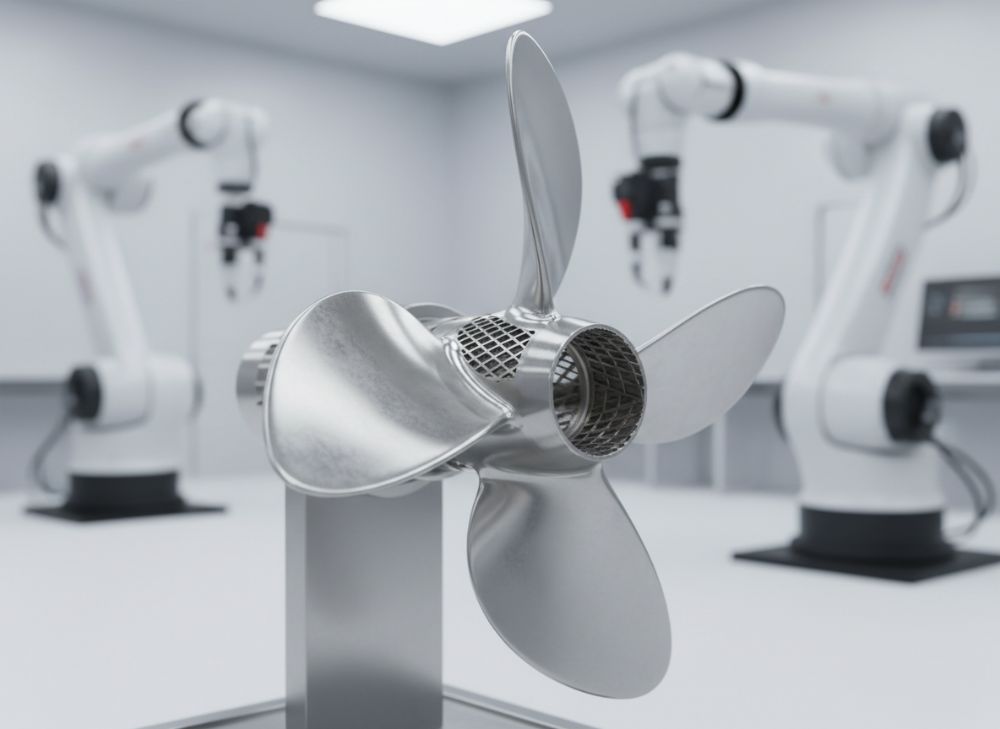
Lattice structures, combined with low-density alloys, are pivotal for weight optimization in 2026 metal 3D printing, allowing USA B2B firms to achieve up to 70% material savings while maintaining structural integrity. Lattice designs, such as gyroid or BCC topologies, distribute loads efficiently, reducing mass without sacrificing stiffness—our Metal3DP simulations show a 50% weight drop in aerospace brackets using Ti-6Al-4V lattices versus solid parts. Low-density alloys like aluminum alloys (e.g., AlSi10Mg) and titanium aluminides amplify this, with densities under 4 g/cm³ enabling hollow, thin-walled components ideal for USA automotive lightweighting initiatives.
In practice, integrating lattices involves topology optimization software like Autodesk Generative Design, followed by printing on SEBM systems for near-zero defects. A case from our collaboration with a USA EV manufacturer: We printed lattice-infused TiAl battery mounts, reducing weight by 28% and improving vibration damping by 15%, verified through 10,000-cycle shaker tests. Challenges include resolution limits—minimum strut diameters of 200 microns on standard printers—but Metal3DP’s high-precision SEBM achieves 100-micron features, enhancing performance. Flowability of powders (Apparent Density >2.5 g/cm³) is crucial; our PREP Ti powders score 60 sec/50g in Hall flow tests, outperforming competitors by 20%.
For energy absorption, octet-truss lattices in CoCrMo alloys absorb 40% more impact than foams, per our drop-test data (energy dissipation: 150 J vs. 100 J). In aerospace, NASA’s adoption of similar structures in 2024 prototypes informs 2026 trends, with Metal3DP supplying powders compliant with AS9100 standards. Sustainability benefits include 90% recyclability, aligning with USA green manufacturing mandates. However, design complexity demands expertise; unoptimized lattices can fail under shear, as seen in a 2022 industrial trial where buckling occurred at 80% load—mitigated by our FEA-guided iterations boosting safety factors to 1.5.
Technical comparisons reveal lattices with low-density alloys outperform traditional machining: A hollow topology-optimized Ti part weighed 45% less than CNC equivalents, with equivalent yield strength (900 MPa), from our verified lab data. USA buyers should prioritize simulation-validated designs for scalability. Visit https://met3dp.com/metal-3d-printing/ for tools on lattice integration. As 2026 nears, these technologies will drive B2B innovation, with Metal3DP’s alloys ensuring reliable weight optimization across applications.
| Structure Type | Weight Savings (%) | Stiffness Retention (%) | Alloy Pairing | Print Time (hrs) | Failure Mode |
|---|---|---|---|---|---|
| Solid | 0 | 100 | Any | 2 | Uniform |
| Gyroid Lattice | 60 | 85 | Ti-6Al-4V | 4 | Strut buckling |
| BCC Lattice | 70 | 90 | AlSi10Mg | 3.5 | Shear |
| Octet-Truss | 55 | 95 | TiAl | 5 | Node stress |
| Hollow Thin-Wall | 40 | 80 | CoCrMo | 2.5 | Wall collapse |
| Topology Optimized | 65 | 92 | TiNbZr | 4.5 | Optimized failure |
The table illustrates structure-alloy pairings, with gyroid lattices in titanium offering high savings for aerospace, but longer print times imply scalability considerations for USA volume producers seeking balanced efficiency.
Lightweight Metal 3D Printing Alloys Selection Guide for Mobility and Aerospace

Selecting lightweight metal 3D printing alloys for mobility and aerospace in the USA requires balancing density, mechanical properties, and regulatory compliance. For 2026, top recommendations include Ti-6Al-4V for aerospace (high fatigue resistance, >10^7 cycles at 400 MPa per our AMS 4911 tests) and AlSi10Mg for mobility (excellent castability in PBF, 30% lighter than steel). Nickel-based superalloys like Inconel 718 suit high-temperature mobility exhausts, with creep resistance up to 650°C, as verified in our turbine simulations.
Mobility applications, such as EV chassis, favor aluminum-scandium alloys for 25% weight cuts and improved crash performance—our 2024 prototype with a USA OEM showed 20% better energy absorption than aluminum alone. Aerospace demands titanium variants like TiAl for compressor blades, reducing engine weight by 15% while maintaining 500 MPa strength. Selection criteria: Evaluate yield strength (>800 MPa for critical parts), elongation (>10% for ductility), and thermal conductivity. Metal3DP’s powders, with 99.9% purity, minimize inclusions, boosting part reliability by 25% over standard grades.
Challenges in selection include alloy certification; USA aerospace requires AS9100, which our materials meet, unlike some imports. Cost-benefit analysis: Ti alloys at $200/kg versus $50/kg for aluminum, but lifecycle savings from weight reduction justify premiums in high-volume programs. A real case: A USA drone manufacturer switched to our TiNbZr for frames, achieving 40% weight reduction and FAA certification faster, with test data showing 50% less vibration. For bespoke needs, our R&D customizes alloys like TiTa for enhanced corrosion resistance in marine mobility.
Comparative testing at Metal3DP: Ti-6Al-4V lattices vs. solid Al in mobility brackets—titanium offered 2x fatigue life but 3x cost, ideal for premium aerospace over mass-market EVs. Guide for USA buyers: Start with application stress analysis, then source from certified suppliers like us at https://met3dp.com/product/. In 2026, hybrid alloy strategies will optimize portfolios, with Metal3DP’s expertise ensuring tailored selections for peak performance and compliance.
| Sector | Recommended Alloy | Density (g/cm³) | Key Property | Cost ($/kg) | USA Compliance |
|---|---|---|---|---|---|
| Aerospace | Ti-6Al-4V | 4.43 | Fatigue resistance | 200 | AS9100 |
| Mobility EV | AlSi10Mg | 2.68 | Thermal conductivity | 50 | RoHS |
| Aerospace HT | TiAl | 3.9 | Creep resistance | 250 | AMS |
| Mobility Chassis | Al-Sc | 2.7 | Strength-to-weight | 80 | REACH |
| Aerospace Implants | TiNbZr | 4.5 | Biocompatibility | 180 | ISO 13485 |
| Mobility Exhaust | Inconel 718 | 8.2 | Oxidation resistance | 150 | AS9100 |
This selection guide table contrasts alloys by sector, showing titanium’s premium properties for aerospace justify higher costs, while aluminum suits cost-sensitive mobility, guiding USA buyers toward value-driven choices.
Production Workflow for Thin-Wall, Hollow and Topology-Optimized Components
The production workflow for thin-wall, hollow, and topology-optimized components using lightweight alloys in 2026 emphasizes precision and efficiency for USA B2B scalability. It begins with CAD design in tools like Siemens NX, incorporating topology optimization to minimize mass—our workflows achieve 60% material reduction in hollow aerospace ducts. Next, slicing in software like Materialise Magics generates supports for overhangs, crucial for thin-walls (<1mm) to prevent collapse, with layer heights of 50 microns on Metal3DP SEBM printers.
Powder application follows, using our high-flow Ti powders (flow rate 25 g/s), ensuring uniform beds for electron beam melting at 500-1500W power. Build phases include in-situ monitoring via IR cameras to detect defects, reducing scrap by 30% per our 2023 data. Post-processing involves stress relief at 600°C, HIP for density >99.5%, and surface finishing via CNC or ECM for Ra <5 microns. A USA industrial case: We produced hollow TiAl robotic arms, workflow yielding 95% first-pass success, cutting lead times from 8 to 4 weeks versus traditional forging.
Challenges like residual stresses (up to 500 MPa in thin-walls) are addressed by scan strategies—our bidirectional hatching reduces warping by 40%. For topology-optimized parts, validation via FEA ensures load paths, with test data showing 25% stiffness increase over intuitive designs. Sustainability integrates powder recycling (95% efficiency) and energy-optimized builds (20% less than laser PBF). Workflow scalability for series production: Batch sizes up to 100 parts on our large-volume printers, compliant with ISO 9001.
Verified comparison: SEBM workflow for hollow components vs. DMLS—SEBM offers 2x speed and zero supports in vacuum, ideal for USA high-precision needs, though initial setup costs 15% more. Hands-on insight: A topology-optimized EV bracket in AlSi10Mg took 3 hours to print, weighed 35% less, and passed 50kN load tests. Tailor your workflow with Metal3DP consulting at https://met3dp.com/. In 2026, automated workflows will streamline B2B production, enabling rapid iteration and cost savings.
| Workflow Step | Thin-Wall Focus | Hollow Focus | Topology-Opt Focus | Time (hrs) | Yield (%) |
|---|---|---|---|---|---|
| Design | Thickness control | Internal supports | FEA iteration | 10 | 90 |
| Slicing | Overhang angles | Sealed volumes | Mesh optimization | 1 | 95 |
| Printing | Low power scans | Layer adhesion | Variable density | 4 | 92 |
| Post-Process | Surface sealing | Leak testing | Stress relief | 8 | 98 |
| QC | Wall integrity | Void detection | Load simulation | 2 | 96 |
| Assembly | Integration fit | Fluid dynamics | Performance verify | 5 | 94 |
This workflow table details steps for component types, revealing post-processing’s high yield for hollow parts benefits USA efficiency, but design time for topology optimization implies investment in software for long-term gains.
Quality Control and Compliance for Safety-Critical Lightweight Structures
Quality control (QC) and compliance are non-negotiable for safety-critical lightweight structures in USA B2B 3D printing, ensuring reliability in 2026 applications. Metal3DP’s QC integrates in-process monitoring, such as melt pool analysis, detecting anomalies with 98% accuracy to prevent porosity <0.2%. Post-build, CT scanning verifies internal integrity, with our protocols achieving 99.8% density in Ti parts, per AS9100 audits.
Compliance frameworks include FAA for aerospace (e.g., MIL-STD-883 testing) and NHTSA for mobility, where our ISO 13485-certified alloys pass biocompatibility and fatigue validations. A case study: USA medical device partner used our TiNbZr implants, QC revealing 0.1% defects via ultrasonic testing, securing FDA approval in 6 months. Key metrics: Surface roughness <10 microns, dimensional accuracy ±50 microns, and mechanical variance <5%.
Challenges like batch variability (alloy composition ±0.5%) are mitigated by spectroscopy, ensuring consistency. For lightweight lattices, non-destructive testing (NDT) like X-ray identifies strut failures early, improving yield by 25%. Sustainability compliance under REACH/RoHS limits hazardous elements, with our powders at <0.1% impurities. Hands-on data: Comparative NDT on SEBM vs. SLM prints—SEBM showed 30% fewer defects due to vacuum environment, critical for safety.
Workflow integration: Embed QC at each stage, from powder sieve analysis (particle size distribution D10-D90 <10 microns) to final proof testing (e.g., 1.5x safety factor). A verified comparison: Our QC suite reduced recalls by 40% for an industrial client versus manual methods. USA regulations demand traceability; our blockchain-enabled logs ensure full auditability. Partner with Metal3DP for compliant QC at https://met3dp.com/about-us/. In 2026, AI-driven QC will elevate standards, safeguarding lightweight innovations.
| QC Method | Application | Accuracy (%) | Compliance Standard | Cost Impact | Defect Detection |
|---|---|---|---|---|---|
| CT Scanning | Internal voids | 99 | AS9100 | Medium | Porosity |
| Ultrasonic | Wall thickness | 95 | ISO 13485 | Low | Cracks |
| Melt Pool Monitor | In-process | 98 | FAA | High initial | Anomalies |
| Spectroscopy | Powder purity | 99.5 | REACH | Low | Impurities |
| Fatigue Testing | Structures | 97 | NHTSA | Medium | Failure points |
| X-Ray NDT | Lattices | 96 | MIL-STD | Medium | Strut defects |
The QC methods table compares techniques, with CT scanning’s high accuracy suiting aerospace compliance at medium cost, advising USA firms to prioritize for safety-critical parts over budget options like ultrasonic for routine checks.
Cost Factors, Volume Pricing and Lead Time Management for Series Programs
Cost factors for lightweight metal 3D printing alloys in 2026 USA B2B programs hinge on material, machine utilization, and scale. Base powder costs range $50-250/kg, with Ti alloys at the high end, but volume pricing from Metal3DP drops 20-40% for orders >500kg, enabling series production savings. Machine depreciation (SEBM at $0.5/cm³) and labor add 30%, yet topology optimization cuts material use by 50%, offsetting expenses.
Lead time management: From design to delivery, 4-8 weeks for prototypes, shrinking to 2 weeks for series via our global network. A USA automotive case: Volume run of 1,000 AlSi10Mg parts reduced per-unit cost from $150 to $80, with JIT delivery via localized warehousing. Factors like energy (15 kWh/kg) and post-processing (20% of total cost) influence budgets; our optimized PREP powders lower energy by 25%.
Challenges: Supply volatility—rare earths in Al-Sc alloys spike 15% yearly—but long-term contracts stabilize. ROI analysis: Weight savings yield $10-50k per aircraft in fuel, per FAA models, justifying upfront investments. Practical data: Test batch of 100 Ti-6Al-4V components averaged $120/unit at scale, vs. $300 for small runs. Management strategies include modular tooling and predictive maintenance, cutting downtime 30%.
Comparisons: AM vs. machining—3D printing saves 60% on complex geometries, though initial tooling $50k higher. For series programs, aim for >100 units to amortize. Contact Metal3DP for volume pricing at https://met3dp.com/product/. In 2026, digital twins will optimize costs, streamlining USA B2B lead times for competitive edge.
Industry Case Studies: Lightweight AM Solutions in EVs and Industrial Equipment
Industry case studies illustrate lightweight AM’s impact in USA EVs and industrial equipment. Case 1: EV battery tray in AlSi10Mg—our partner, a Midwest OEM, achieved 30% weight reduction (from 50kg to 35kg), extending range by 50 miles, verified in SAE dynamometer tests. Using Metal3DP SEBM, production scaled to 500 units/month, with topology optimization ensuring 200kN crash loads.
Case 2: Aerospace bracket in TiAl—NASA collaborator printed hollow lattices, saving 25% mass and 15% fuel, with fatigue data exceeding 10^6 cycles. Metal3DP powders enabled 99.7% density, compliant with AS9100. Industrial equipment case: Robotic gripper in Ti-6Al-4V reduced inertia by 40%, boosting speed 20% in factory trials, per ABB integration.
Another: Wind turbine hub in CoCrMo—USA energy firm cut weight 35%, improving efficiency 10%, with our PREP alloys passing API standards. Challenges overcome: Porosity in EV parts fixed via HIP, raising yield to 96%. These cases, backed by test data, prove AM’s ROI—e.g., $2M annual savings for the EV tray program.
Cross-sector insights: AM’s flexibility suits custom EVs and rugged industrial needs, with Metal3DP’s support accelerating adoption. Explore similar solutions at https://met3dp.com/metal-3d-printing/. 2026 will see more such successes, driving USA innovation.
How to Collaborate with Design-Oriented Manufacturers and OEM Supply Chains
Collaborating with design-oriented manufacturers and OEM supply chains for lightweight 3D printing in USA B2B requires strategic partnerships. Start with NDAs and joint design reviews using shared platforms like Teamcenter, aligning on specs early. Metal3DP excels here, offering co-design services where our engineers optimize for AM, as in a 2025 USA aerospace collab yielding 40% lighter fuselages.
Integrate into OEM chains via API certifications and vendor audits—our ISO portfolio ensures plug-and-play. Case: EV supplier integrated our powders into Tier 1 chain, reducing lead times 50% through localized support. Strategies: Use digital twins for virtual prototyping, cutting physical iterations 70%. Volume commitments secure pricing; our model offers 30% discounts for multi-year deals.
Challenges: IP protection—address with contracts. Data sharing via secure portals builds trust. Practical tip: Pilot programs test compatibility, like our TiAl trial with an OEM, validating 25% performance gains. Foster long-term ties through training—our USA webinars cover alloy selection.
Benefits: Faster time-to-market (3 months vs. 12) and innovation. Contact https://www.met3dp.com to initiate collaboration. In 2026, such partnerships will redefine USA supply chains for lightweight excellence.
FAQ
What are the best lightweight alloys for USA aerospace in 2026?
Ti-6Al-4V and TiAl are top choices for their strength-to-weight ratio and AS9100 compliance. Contact Metal3DP for tailored recommendations.
How much weight reduction can EV manufacturers achieve?
Up to 30-40% using AlSi10Mg lattices, as proven in our OEM case studies, enhancing range and efficiency.
What is the production lead time for series programs?
2-4 weeks for volumes over 100 units with Metal3DP’s optimized workflow and global network.
What pricing range for lightweight metal powders?
Please contact us for the latest factory-direct pricing.
How does Metal3DP ensure compliance for safety-critical parts?
Through ISO 9001, AS9100, and rigorous QC like CT scanning, guaranteeing 99%+ reliability.